





Country Homes
H&H Editor Kelvin Browne Takes Us Inside His Charming East Coast Home
Published on June 30, 2026


Kelvin Browne On Setting Up House With His Partner, Michael Allen, In Chester, N.S.
We bought our Chester house before setting foot in it. It wasn’t quite an online impulse buy because a friend, who was nearby, did a reconnaissance. “I could live there,” she said.
I had been based in Toronto for 50 years — I stayed after attending the University of Toronto — and my husband, Michael Allen, had lived there for 40 years. I’m now retired but, in the city, I worked as a writer and arts administrator, including stints as vice-president at the ROM and director of the Gardiner Museum. Michael was, and still is, a lawyer.
We’d been looking for a new Canadian retirement haven after selling our property in Cape Cod, Mass., the year before. Our first attempt was a brief but unconsummated dalliance with Prince Edward County, Ont. After this, Chester became the aspiration, as we realized we missed the ocean and we’d also recently acquired a sailboat — Chester’s Mahone Bay is one of the best places to sail in Canada.
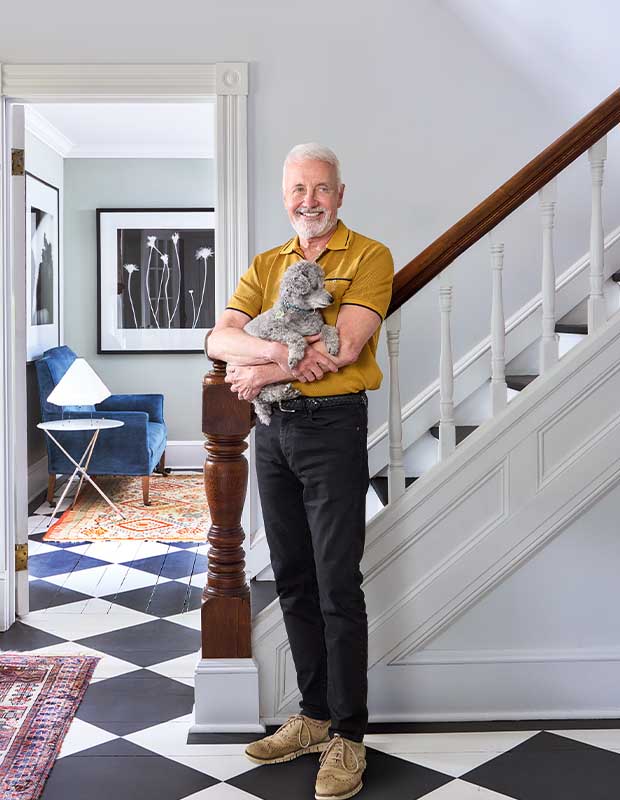
House & Home East Coast editor and homeowner Kelvin Browne, with Wolsey.
While we’d been visiting Chester for 30 years, and almost bought a place there 15 years ago, this house wasn’t on our radar. Nonetheless, it was in the village where we wanted to be, rather than on a picturesque but remote oceanfront property where you couldn’t walk to the grocery store. Also, it was still a time of Covid anxiety. There were few houses for sale in Chester, and the perceived Covid avoidance of small-town living created high demand — hence the precipitous purchase. So, in October 2021, I flew in from Toronto three days after our offer was accepted. It was a relief that the online photos weren’t misleading, and the home had a good vibe.
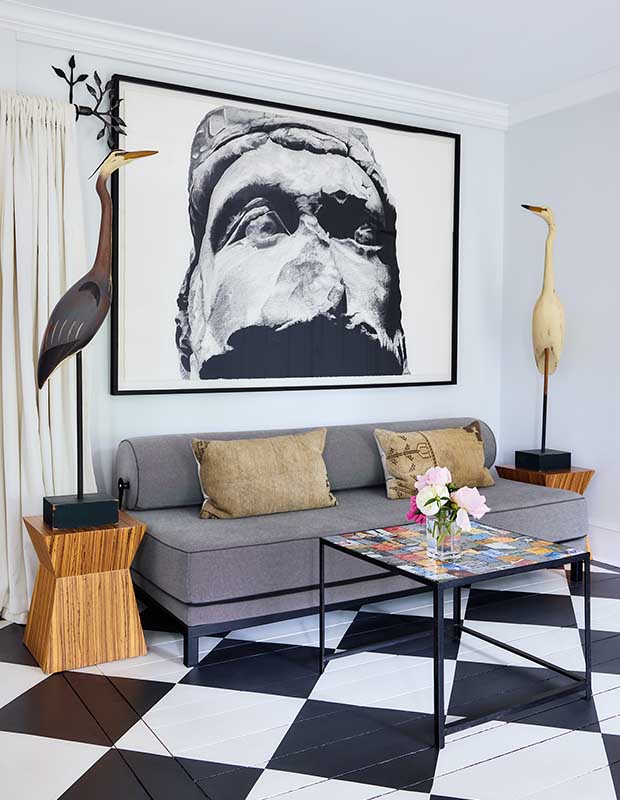
The checkered floor took a week to paint, then another week for the four coats of matte urethane to dry. The charcoal drawing in the front hall is by Frances Grafton; folk art bird carvings sit on Eames side tables.
When we replaced the Mexican tile in the living–dining area with porcelain tile that resembled slate, the existing pine floor in the front hall felt disconnected. Painted floors in the Maritimes are not uncommon, so we painted a black and white checkerboard design over the original pine to better co-ordinate with the new tile. The bold pattern is a nice jolt when you enter the house. Our contractor was initially horrified, of course, but he’s come to like it. We left the stairway as is, except to paint the treads black to tie in with the floors.
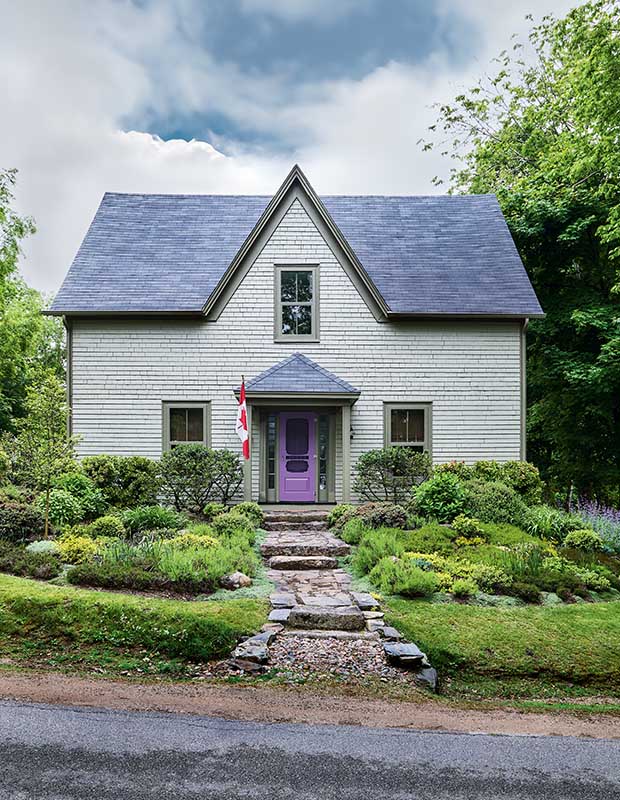
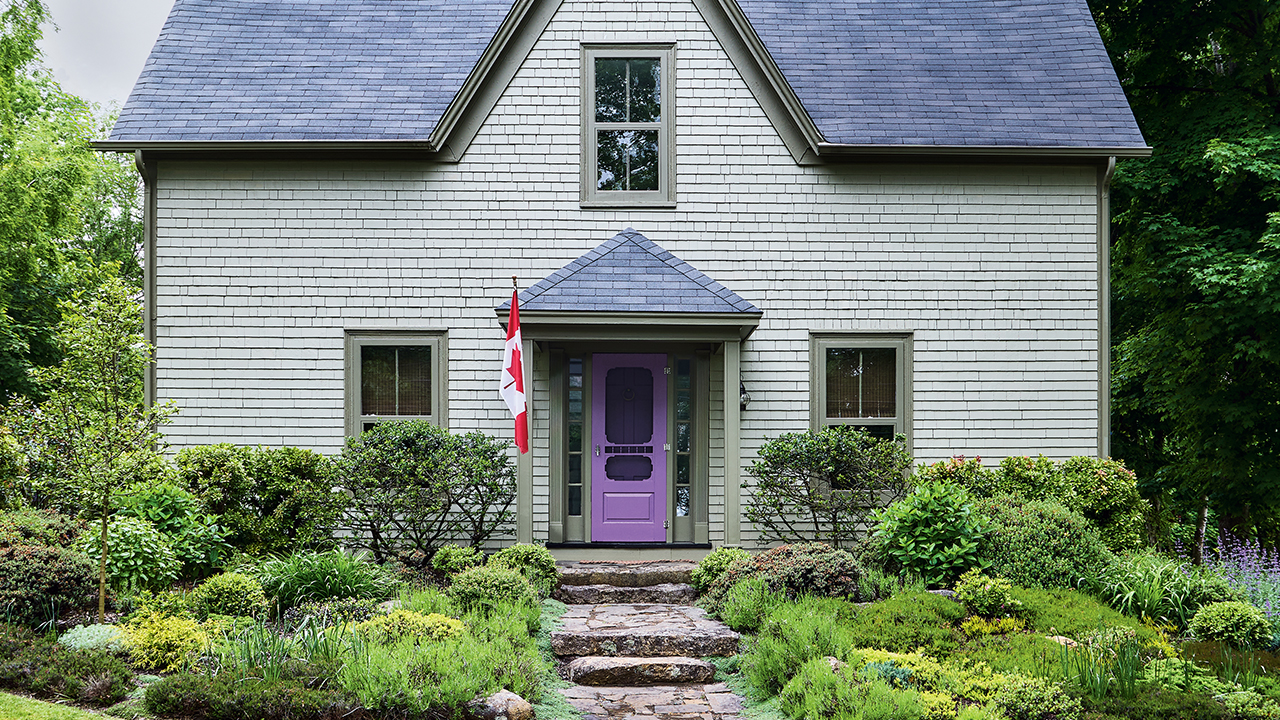
The façade has charming maritime style. When the house was built in 1901, it had a second-floor porch with a deck that was accessed through a door where the second-floor window is now.
The house was built in 1901 by a local judge as a year-round residence. Many local houses of that period were not winterized and used only as summer cottages. We’re told it was a rooming house in the 1930s; at more than 3,500 square feet, and with potentially five bedrooms, it was a good candidate to be one, especially during the Great Depression. We’ve experienced ghosts and suspect they’re from this tumultuous moment in the house’s history. Soon after we arrived in Chester, a new acquaintance said, “I hope you’re going to change your awful house colour.” But we liked it, so it stayed. The door was a dark purple; when we repaired it, we painted it a more vivid purple inspired by the “painted lady” houses in Lunenburg, N.S.
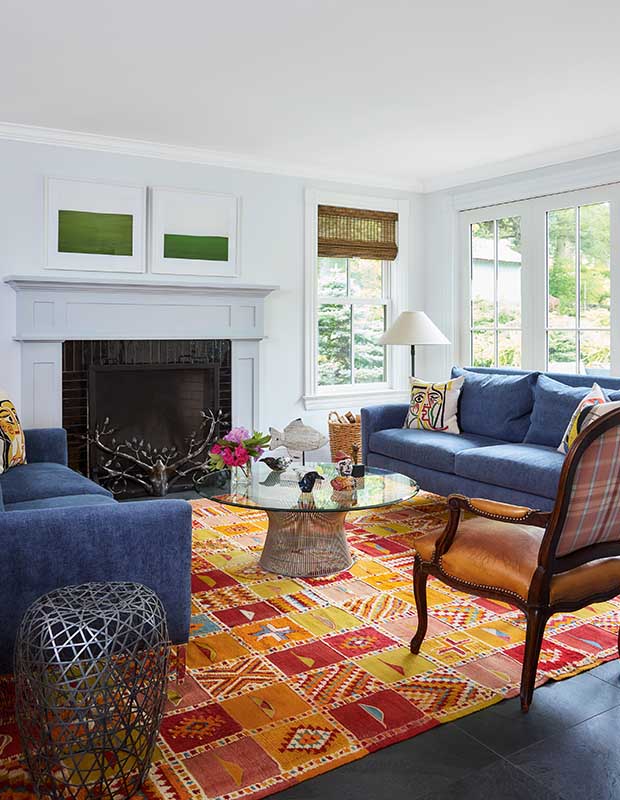
The living room is anchored by an antique Moroccan Berber rug and the new fireplace, which was added during the renovation. The glass-topped coffee table, a pair of Pam Purves photographs above the mantel and the commissioned fireplace screen bring the look together.
We commissioned local artist Scott Hamlin of Scotian Ironworks to create a fireplace screen and suggested that the work of Diego Giacometti be his inspiration.
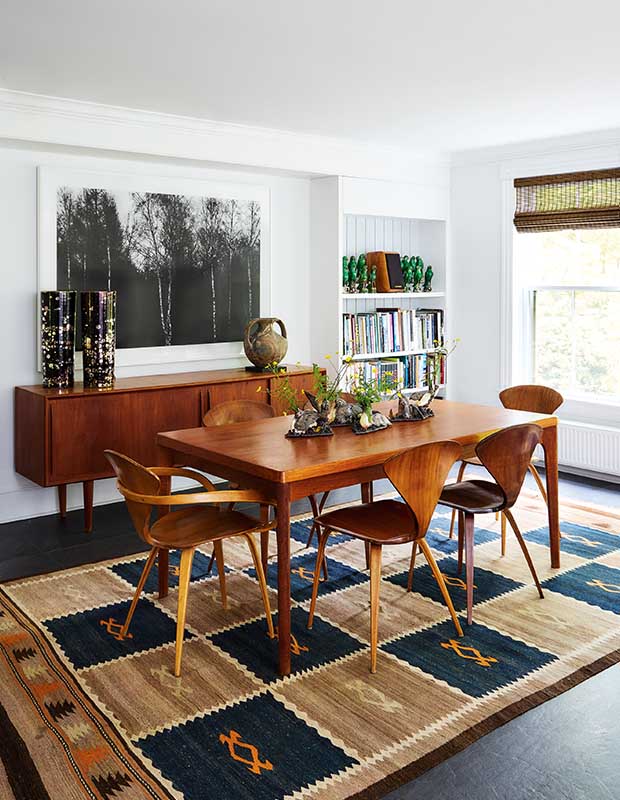
The Danish mid-century modern dining table sits on an antique Alpujarra rug surrounded by vintage Cherner dining room chairs. The sideboard is 1950s American. Half of Kelvin’s collection of 32 Qing Dynasty parrots perch on the top shelf of the bookcase.
About 70 years after this, an American couple, seasonal residents, rebuilt the rear portion of the house when they bought it, including a basement. They sold it to us after summering there for 25 years. We were fortunate our intrepid contractor, referred to us by the previous owners, was miraculously available when Nova Scotia was suddenly booming after years of decline. Dwight Neaves had decades of experience with Chester houses, plus access to gifted trades with the same love, or perhaps tolerance, for working on older homes. Connections are paramount in terms of getting anything done well in the Maritimes, and Dwight had them. In the dining area, we replaced the small, fussy-looking bookcases with more elegant contemporary versions. Throughout, we installed track lighting and added more recessed lights in order to illuminate our art properly.
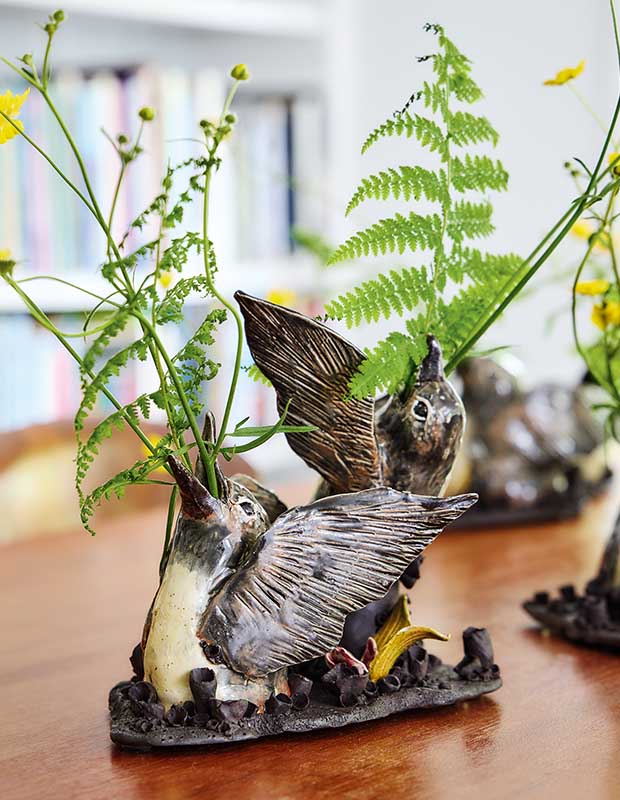
One of the four ceramic bird sculptures that create a tableau on the dining table by Nova Scotia artist Marla Benton.
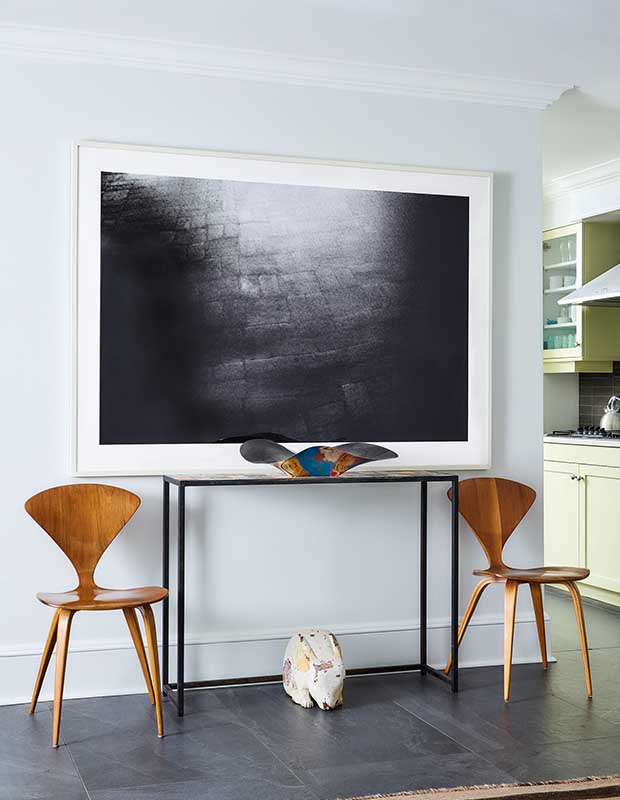
This wall was added during the renovation to separate the kitchen from the living– dining area. The metal console is from India.
A lot of smaller changes add up to a big job: we moved the powder room off the living room to a new front hall that was created, built a fireplace, replaced much of the flooring, added and upgraded windows, built a wall to separate the kitchen from the living room, replaced the kitchen cabinets, added cornice mouldings and renovated the ensuite. I often forget the less visible aspects of the renovation, such as replacing electric baseboard heating with propane hot water rads and recontouring the property outside for better drainage and a dry basement.
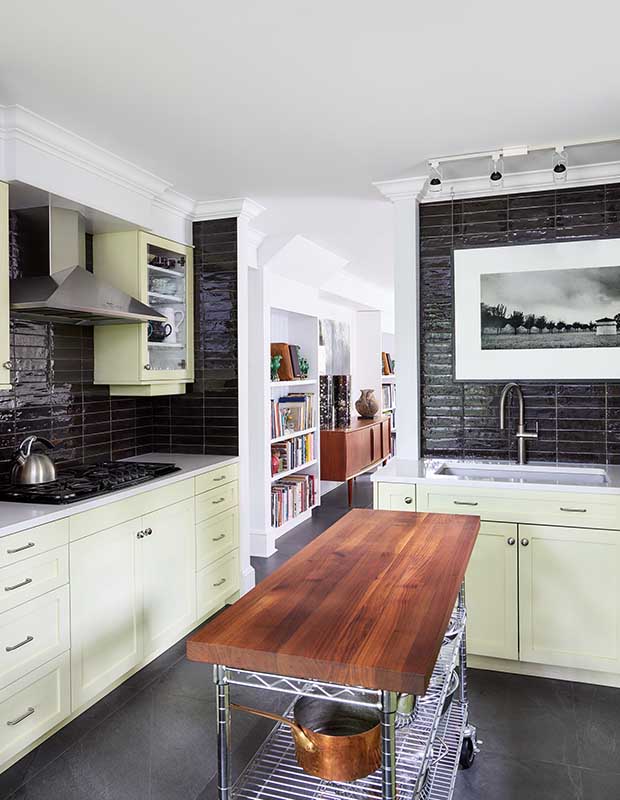
The Shaker-style kitchen cabinets are painted in a pale lemon shade. The black ceramic tile for the backsplash is also used for the fireplace surround in the living room.
I assured Michael that our renovation would be completed in short order and on budget. “Not like the others,” I claimed. We weren’t adding an addition or gutting a place; I was confident. A year later, we were still finishing details and had jettisoned our unrealistic budget months before. The kitchen didn’t start out as a gut job but, in the end, it became one, save for some of the cabinet frames and the cooktop.
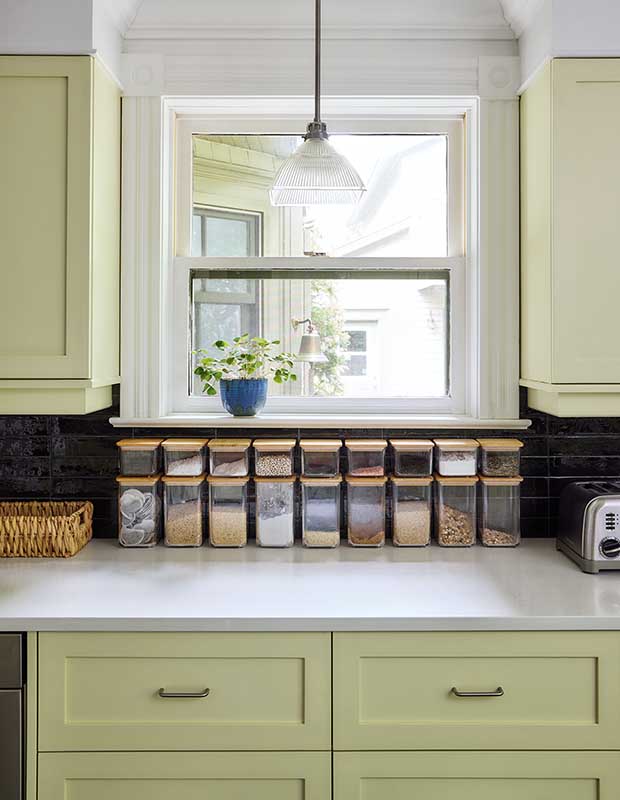
The pendant in front of the window was salvaged from the previous kitchen. Stacked canisters of pantry items look neat and tidy on the counter.
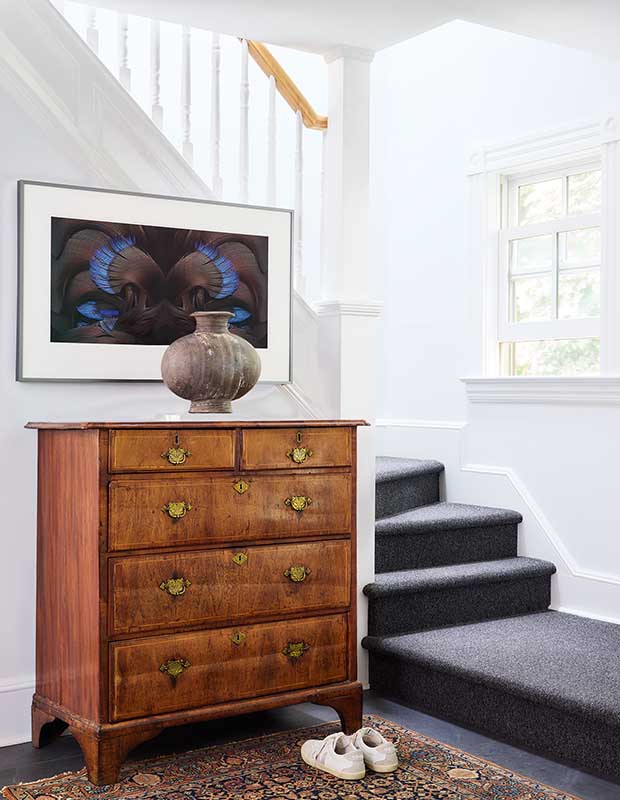
An antique chest, 2,000-year-old Chinese Han Dynasty silk cocoon water jug, photograph by Deborah Samuel from her series The Extraordinary Beauty of Birds and a 19th-century Persian rug create a handsome vignette next to the back stairs.
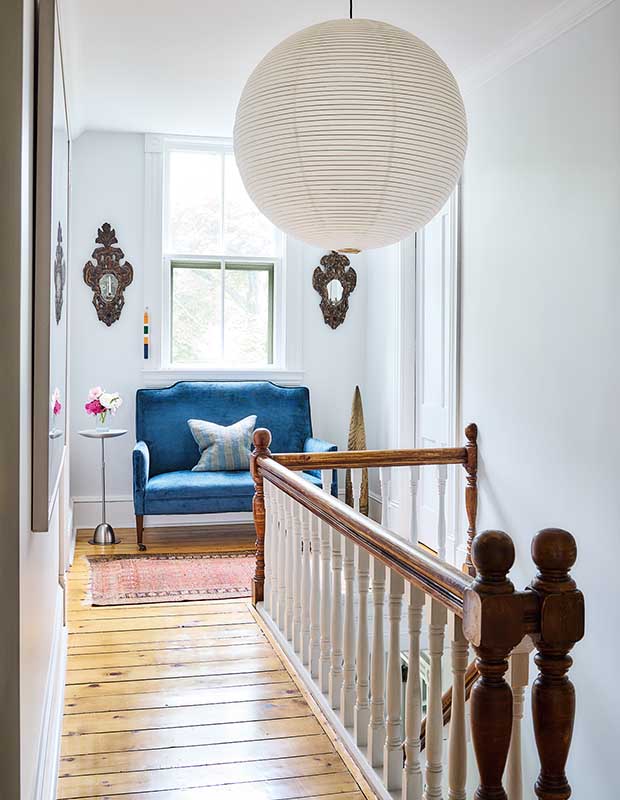
The upstairs hall’s volume is emphasized by an oversized rice paper lantern. A 17th-century Jacobean sofa is covered in blue silk velvet.
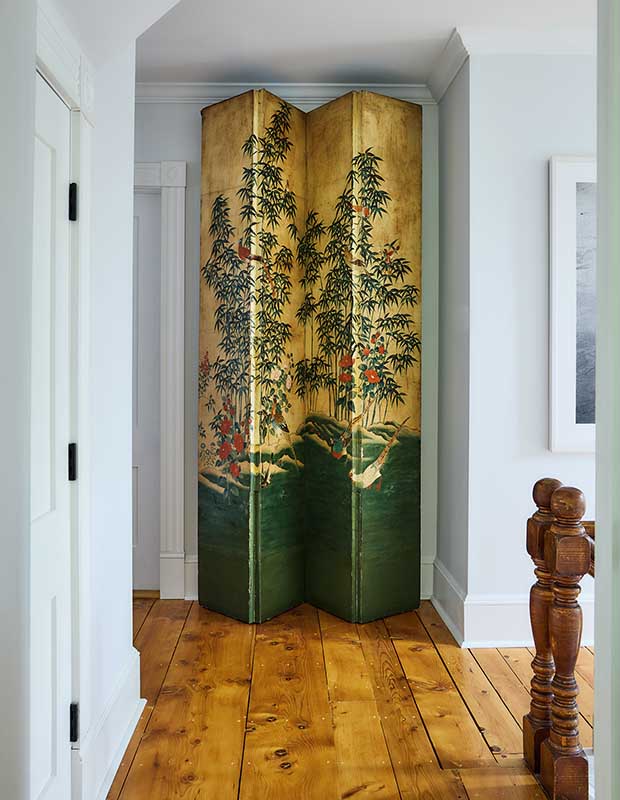
At the top of the stairs sits an antique Japanese screen; the home’s original pine floors have been carefully refinished.
The other decorating was comparatively easier, as we had been collecting furniture and art for decades and had a trove from which to choose. While many things fit, much was sold or went into storage. We also bought some new furniture; these strategic purchases help our eclectic mix look like it belongs together here. The result is a wonderful sense of being surrounded by our past, but having it appear as fresh as a new beginning.
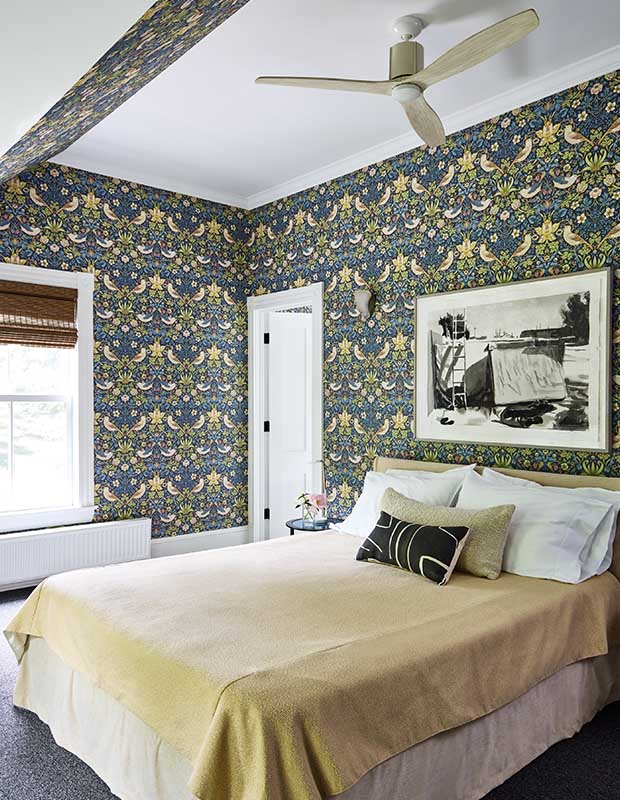
Upstairs in the principal suite, I made my first foray into using wallpaper. The space felt stark, and painted walls of any colour didn’t seem to work. William Morris wallpaper would have been a trendy choice in 1901 when the house was built, and the Strawberry Thief pattern is a classic — I think it works well and has created a cosy room.
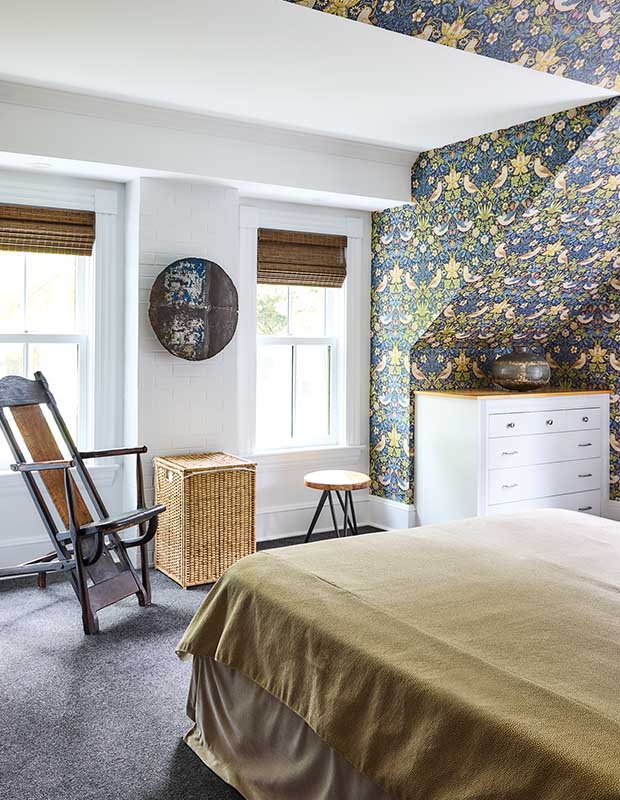
Windows were added on either side of the new chimney when the living room fireplace was built. The circular artwork is an oil drum lid from Nigeria.
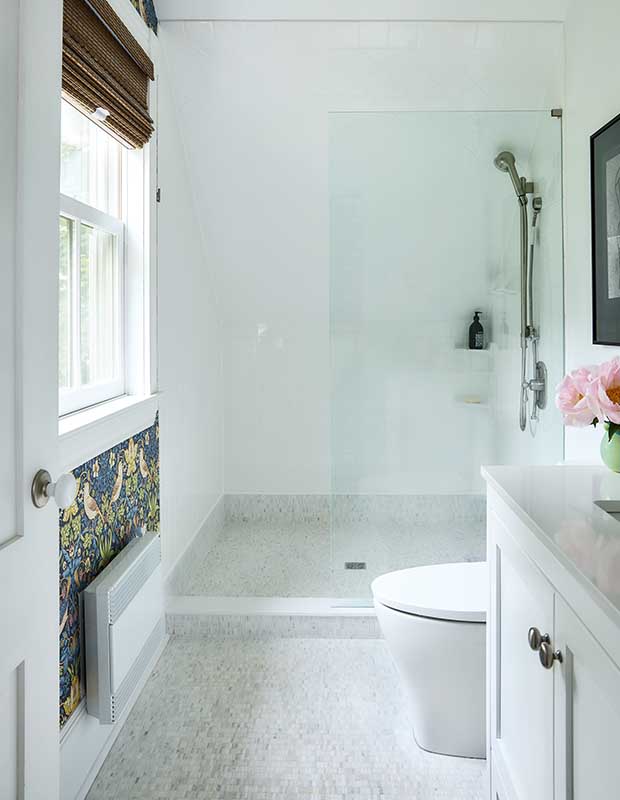
The ensuite was gutted, with only the Art Deco–style ceiling fixture remaining. Mosaic floor tile adds subtle texture, and the wallpaper from the bedroom continues on the exterior wall.
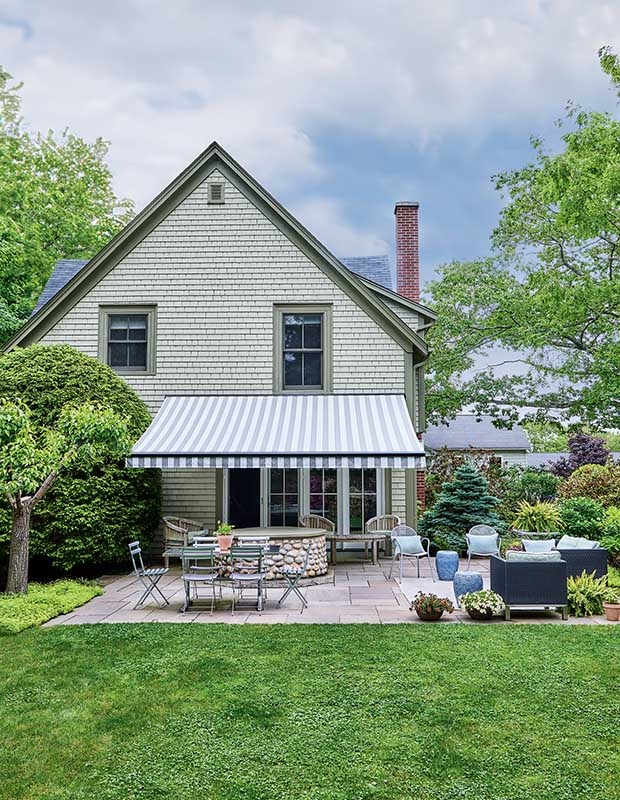
The renovation included swapping the backyard’s wood deck for a stone terrace with a retractable awning. On the terrace is a river stone dug well, not a hot tub as many assume.
Stacey Brandford
House & Home