


Why Softscaping Will Transform Your Garden


Have you heard the term softscaping?
It’s the antidote to all the essential elements of a garden’s hard landscaping, including retaining walls, walkways, patios and fences. The foil is living elements — like grasses, plants, shrubs, flowers, and trees — the building blocks of soft landscaping or softscaping. Planting large trees, hedges and shrubs help ensure privacy, while climbing plants are ideal for covering and disguising unsightly structures. Cascading plants give retaining walls, window boxes or planters a romantic look. Ground cover plants create a carpet of green to fill in gaps between pathway stones. Scroll through to see some of our best softscaping design ideas and get inspired to enhance your garden’s aesthetic.

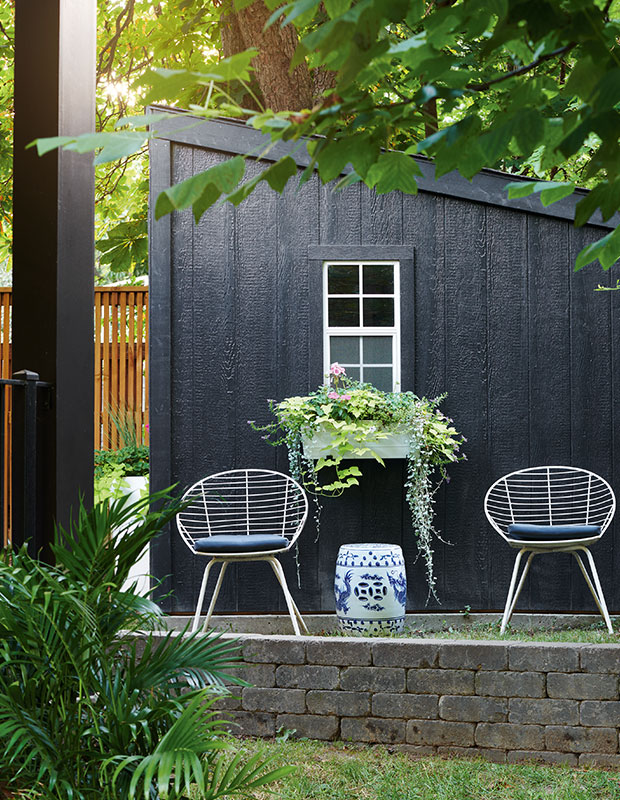
Flowerboxes give outbuildings and utility sheds a pretty glow up. This box’s trailing potato vine and pastel blooms are a romantic touch on an ebony shed in this garden.

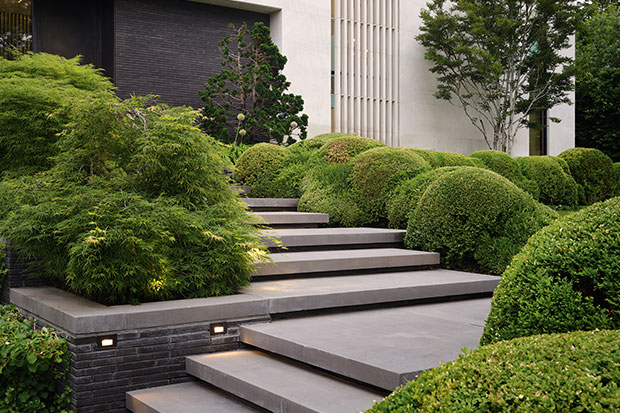
Japanese maples and cloud-clipped, undulating boxwoods contrast the hard lines of precast concrete and stonework steps, for a more organic look.

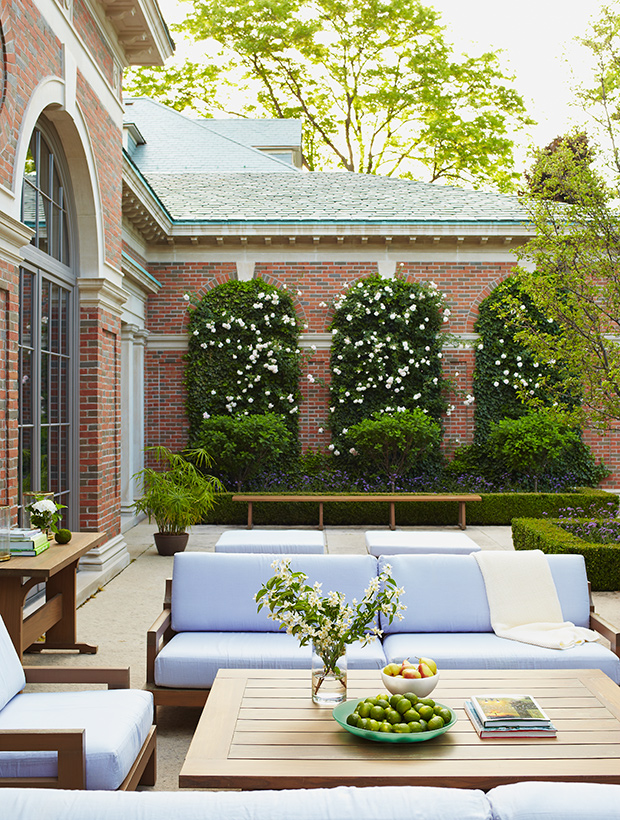
The arches in this home are emphasized by filling them with mature ‘New Dawn’ climbing roses to create a cocoon of greenery. A trio of standard ‘Pee Gee’ hydrangeas in front of the arches lends winter interest, while papyrus fronds (in pot) are an unexpected alternative to annuals.

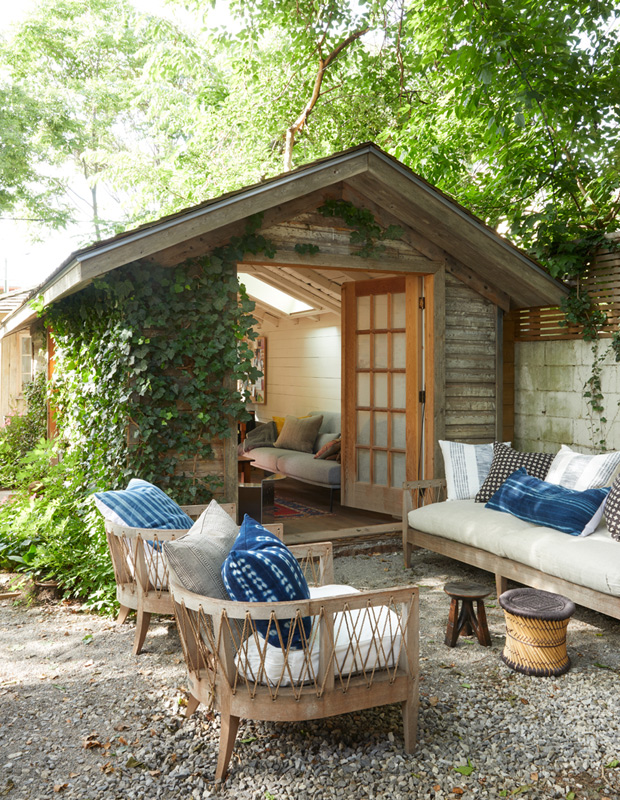
Screenwriter Tassie Cameron’s backyard shed is given an English vibe with an ivy vine that clambers over the wood frame, to emphasize the secret garden feel.

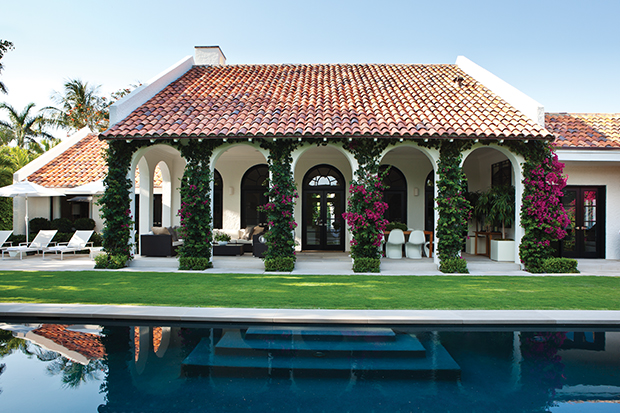
Bright fuchsia bougainvillea blooms add blazing color to the graceful arching columns of this Palm Beach villa. The bonus? No deadheading or maintenance required, this plant is fast growing, tough as nails and can withstand drought and direct sun. Planting bougainvillea in a pot turns it into a flowering machine — the vine actually blooms more when its roots are slightly crowded.

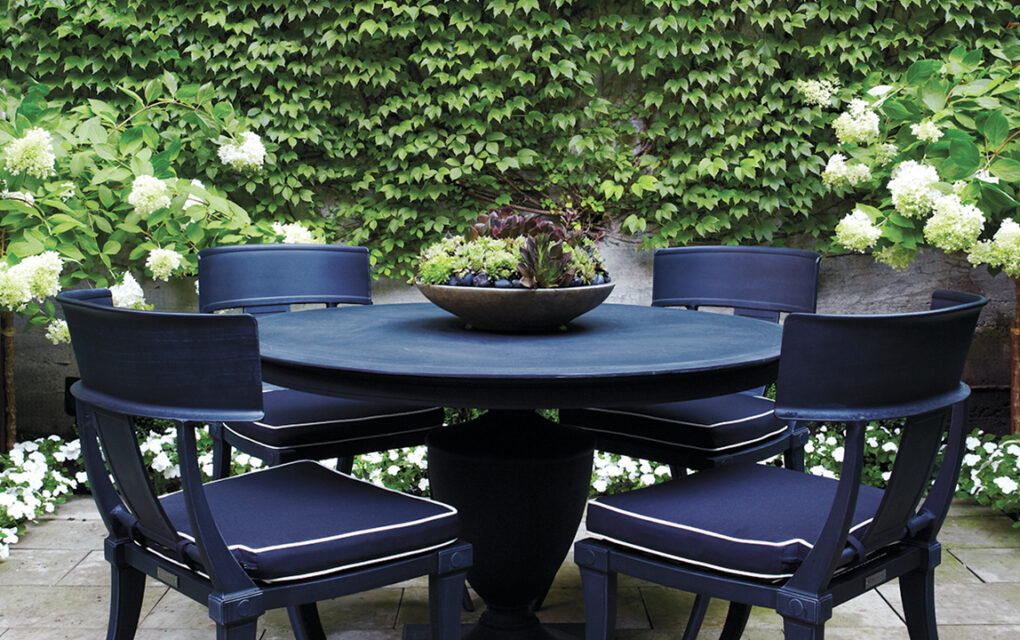
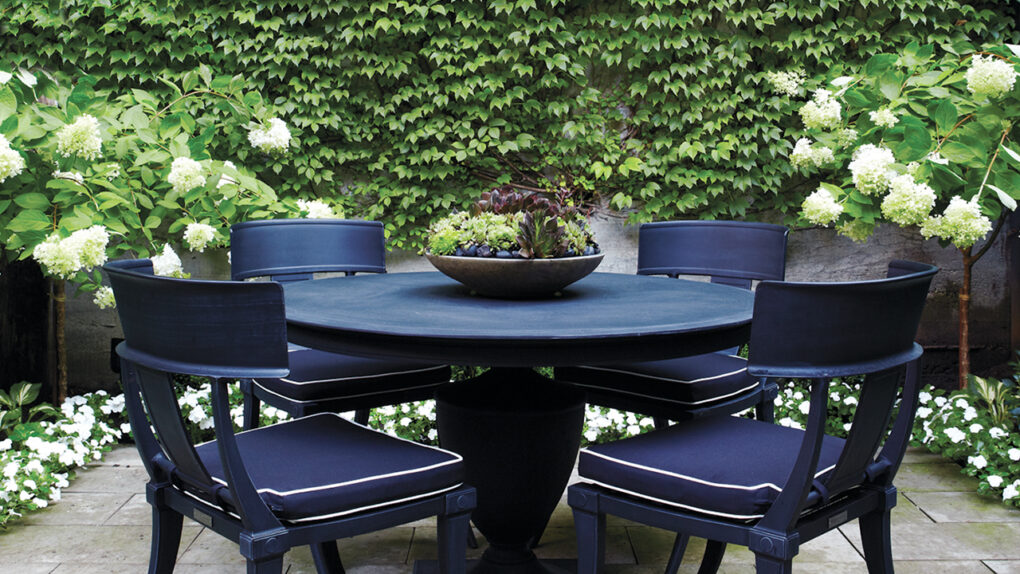
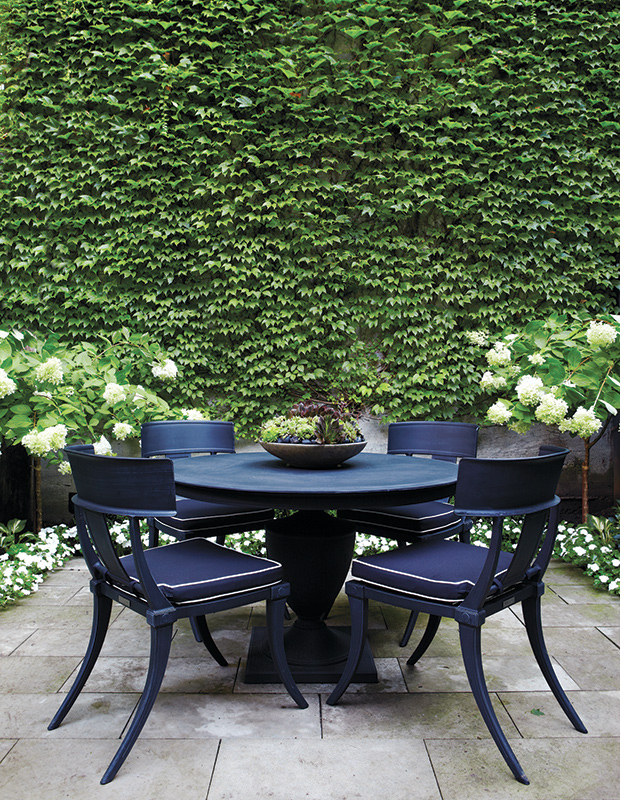
Covering hard structures in green creates a calming curtain. Plant a fast growing vine such as Virginia creeper or the Boston ivy shown here (“the first year it sleeps, the second year it creeps, the third year it leaps”) and prune it regularly. Ivy never fails to lend a rich look, but some self-clinging varieties can crumble mortar and are better suited to fences and trellis structures.

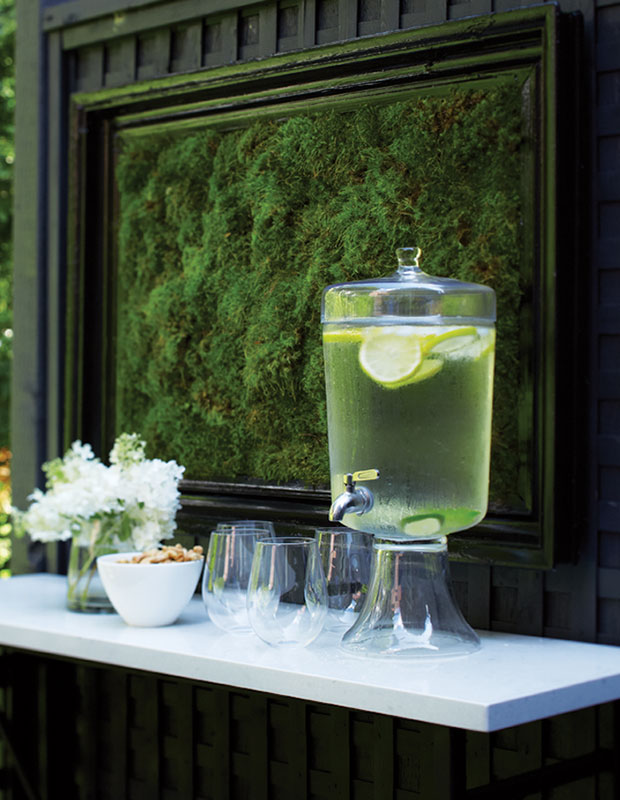
On this fence, a moss panel is inset in a frame to break up the lattice and give the eye a calming focal point and visual breathing space.

Espaliered trees (when the plant’s branches are trained to grow flat against a support) at the base of this Toronto backyard. Growing horizontally to provide a green screen, the branches obscure both the fence and the neighbor’s view, to amp up privacy in a natural way.

When the owners put in the new garage they incorporated a second seating area on a little patio. A cluster of grapevines and rosebushes are trained to grow up the columns and over the pergola, for a more heritage look.

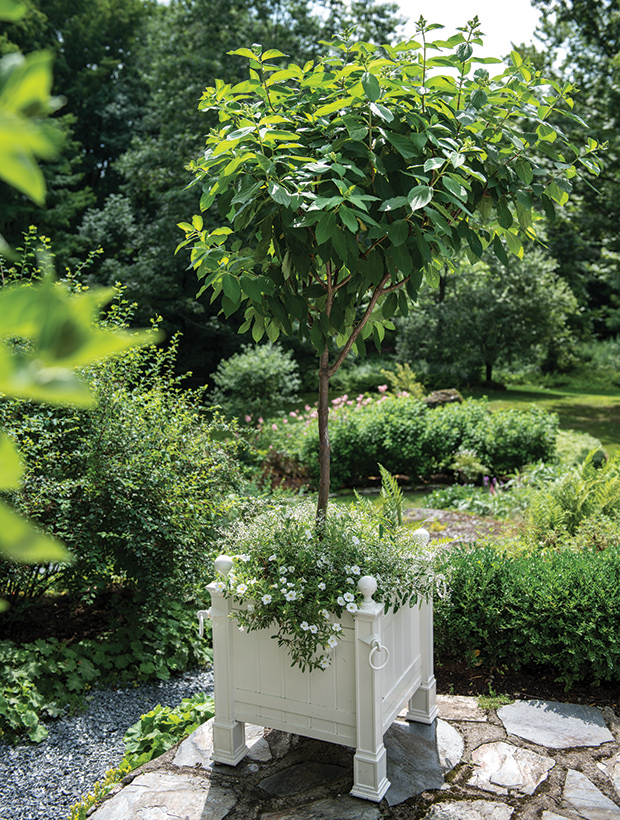
This square planter contains a ‘Pink Diamond’ hydrangea tree, and is underplanted with a cloud of cascading Bacopa flowers that naturalize the base.

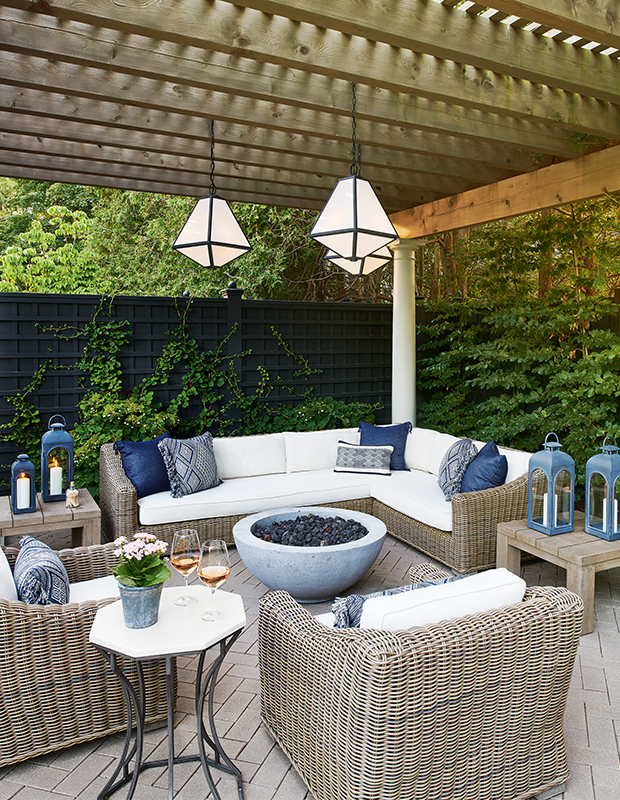
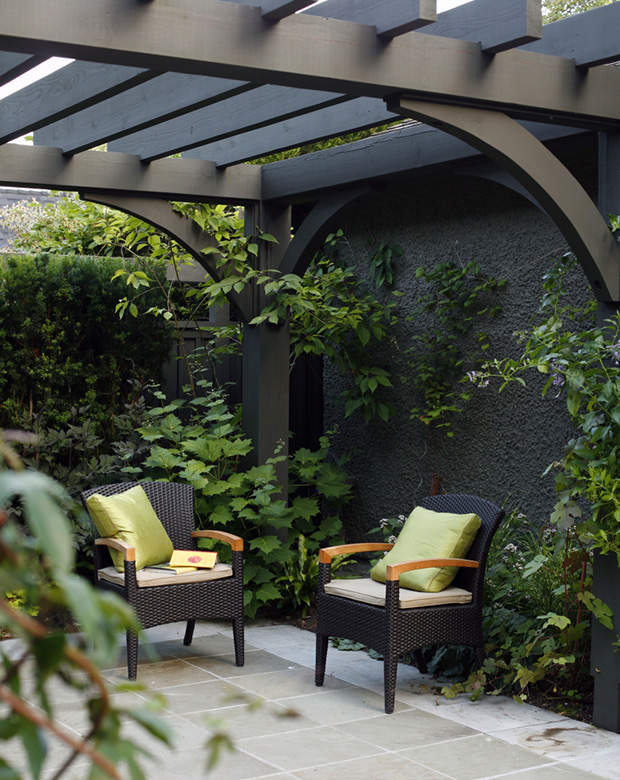
In Hali Macdonald’s backyard, climbing vines and a row of shrubs create a green cocooning, cooling environment under a pergola.

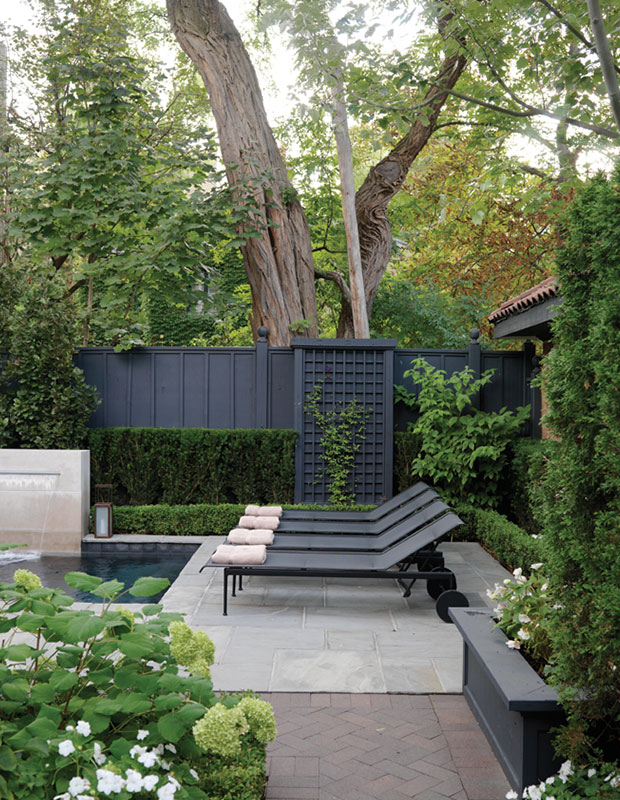
This black-painted trellis was added to disguise a telephone pole. “We used the architecture of his garage as a feature in our garden,” says homeowner Mark Robert. Boxwood and yew hedges add structure and soften the palette, while white hydrangeas and impatiens contrast the dark planter boxes.

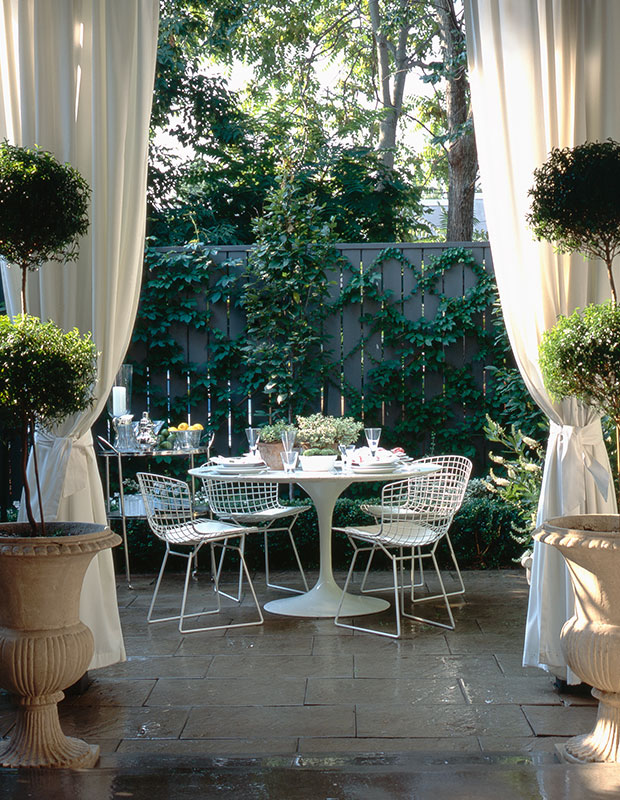
Training ivy to grow in a fanciful diamond trellis design adds visual interest to a dark fence near this patio dining area.

Clematis clambers over the gates of Les Ensembliers Eastern Townships home, and adds pretty pop of purple.

This Niagara-on-the-Lake yard has a large screen made from found branches (and it’s a comfortable spot for the wheaten terrier, Caber). The branches are covered in vines to further obscure a treehouse and studio beyond, a hide-and-reveal tactic.

Plants like clematis, honeysuckle, ivy, wisteria, and grapevines can create a natural canopy to obscure a support. Pergolas can also offer shelter for plants that can’t tolerate a full day of sun exposure.

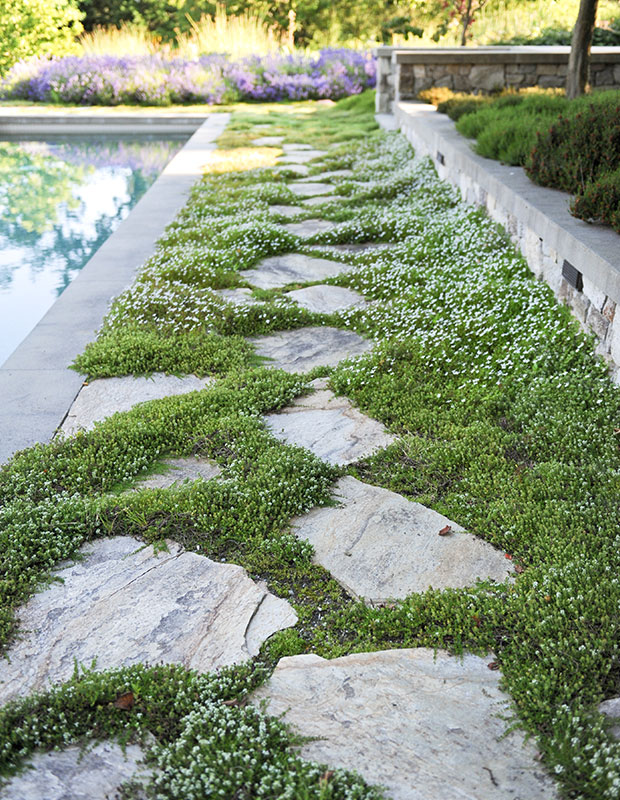
Neglected pathway gaps can get overrun by weeds. Fill them in with creeping plants that will stay low, won’t mind being squashed, and may even be fragrant when stepped on, like the thyme in this Vancouver garden.

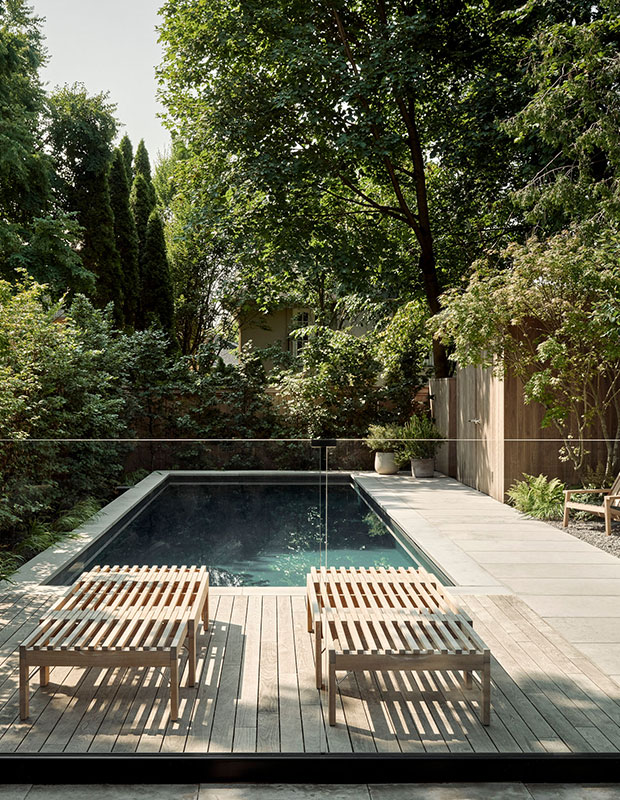
Softscaping using trees or shrubs can create a windbreak, as well as offering privacy. A new row of beech trees at the foot of this backyard offers reliable coverage with minimal maintenance.

Climbing vines enhance an Old World stone fountain, and give it a fairytale mystique.
