

Inside A Modern, Scandi-style Prefab Retreat in the Canadian Wilderness



Most people don’t get to see wolves in the wild.
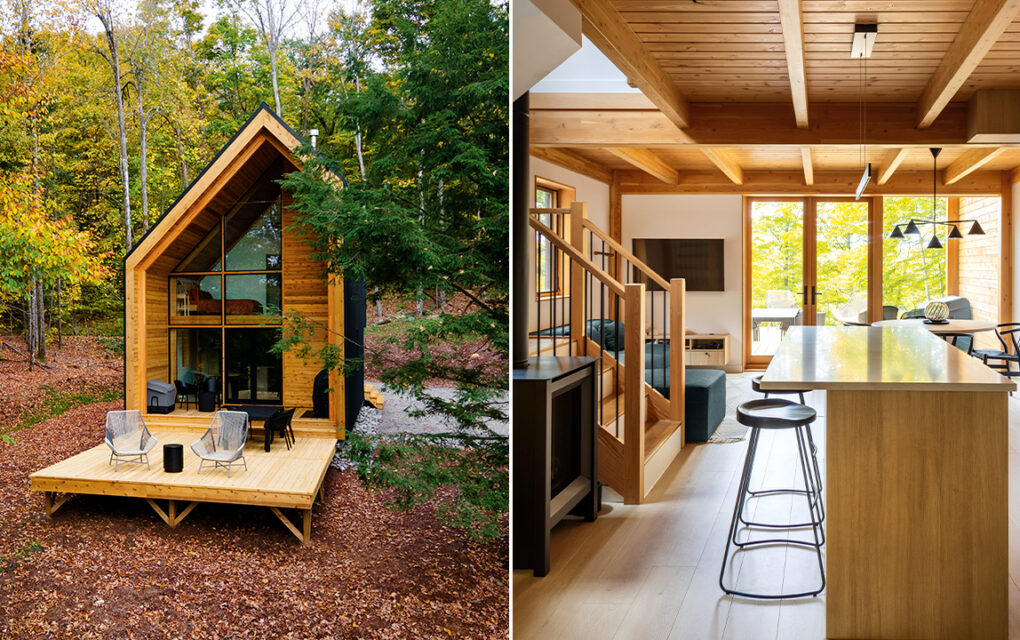
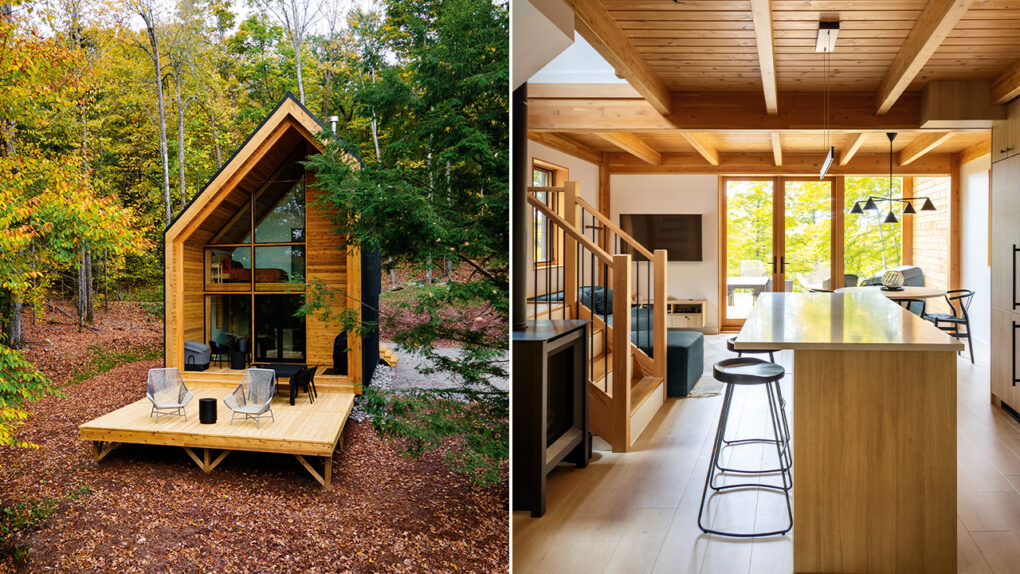
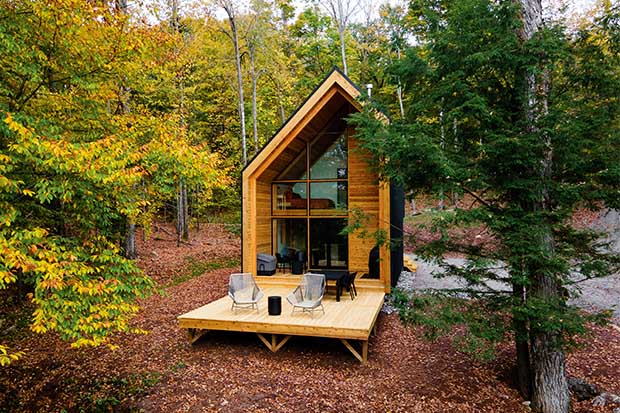
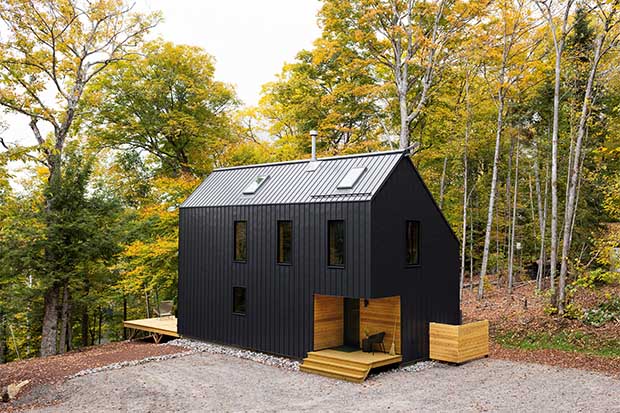
Cathy Cicchini, on the other hand, recently watched one stroll right past her front door. The creative director and her husband, Mike Cicchini, who live in Richmond Hill, Ont., built their prefab cabin on Ontario’s Long Lake in Haliburton. The compact yet sleek dwelling is perched on the granite ridges of the Canadian Shield surrounded by forest, clean-lined and spare in all the right ways. Cathy had long been drawn to the idea of a tiny home but knew she didn’t want anything on wheels. When she found The Backcountry Hut Company, a specialist in prefab dwellings, she loved everything about the designs. “Backcountry was so different from any other kind of prefab out there,” she says. “The cabins have a European, Scandinavian feel.” Cathy and Mike purchased the System 02 model designed by Leckie Studio. The project came together over nine months, from December 2023 to August 2024. After the foundation was poured, the kit was delivered — with the cabin as an exterior shell — and a carpentry company assembled it.

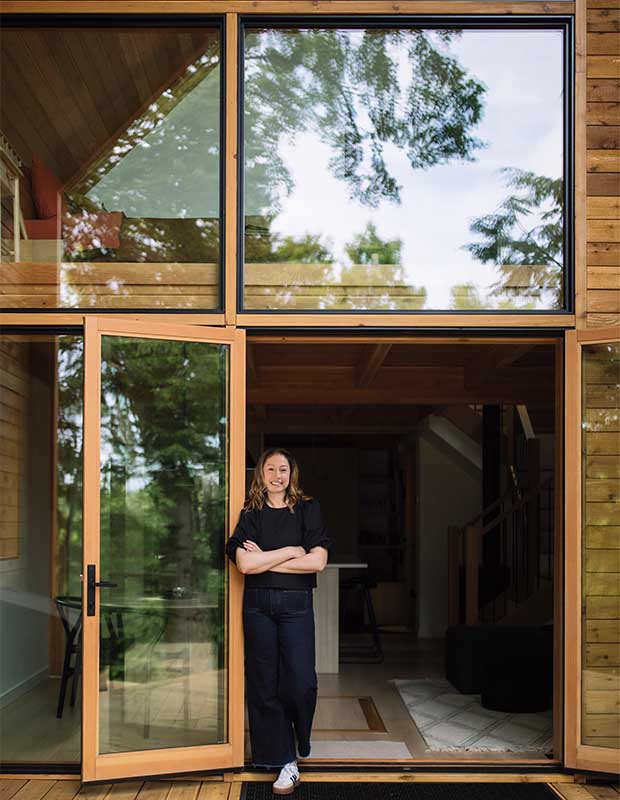
Homeowner Cathy Cicchini.
Cathy worked closely with designer Nadia Milton to shape the 923-square-foot, two-bedroom, one-and- a-half-bath retreat. Nadia created the floor plan and furniture layout, the plan for the electrical and ceiling elements, and helped with finishes. Cathy and Mike decided to place the main bathroom upstairs and add a back deck for extra outdoor living space.

The main entrance seems notched out of the structure and is accented in cedar, a contrast to the dark sheet metal. “The cabin is so striking,” says Cathy. “Every time I drive up, I think, Wow.”
The Backcountry Hut Company co-founder and architect Michael Leckie says Backcountry has a unique offering. “Our prefab designs start from architecture, not construction, and that’s what makes us different.” Durability is a core feature of the cabins. The metal cladding handles Canadian winters with ease — and one cabin recently survived a wildfire on Shuswap Lake in B.C. “The noncombustible cladding saved it,” says Michael.
Related: Clean lines and durable finishes define this remote, oceanfront B.C. cottage

The front entry is compact and überfunctional with open shelves, a bench and a wall of built-ins.
Cathy and Nadia brainstormed together to maximize function. “We needed storage,” says Nadia, “so we did a full wall of built ins at the entrance. You don’t want a closet taking up precious inches when you’re coming in with skis or wet snow gear.”

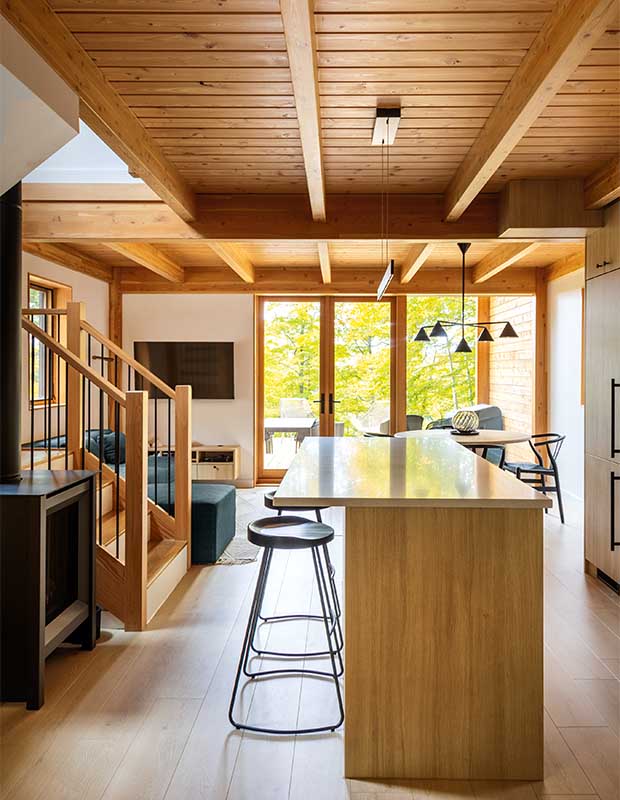
From the entrance, the sight line is all warm wood tones, clean lines and a beautiful view to the outdoors.
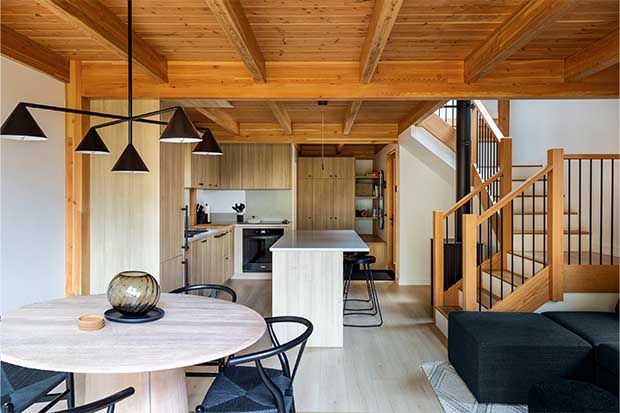
The modern two-storey structure balances Canadian grit with Scandi calm: black metal siding, Douglas fir ceilings, floor-to ceiling glazing and no window treatments combine with blond woods, white walls and touches of black for a meditative, Nordic vibe.

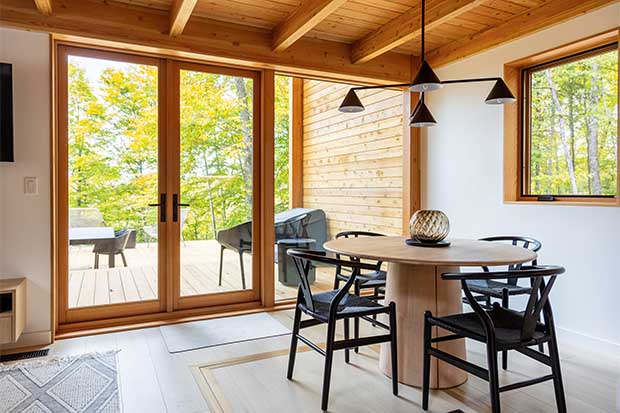
The minimalist dining area is unadorned yet inviting.
Thanks to the cabin’s considered design and smart window placement, the couple hasn’t needed window coverings for light control or warmth. “There’s never a strong sunbeam hitting us in the face or waking us up — it’s just a slow, gentle glow,” says Cathy. Nestled amongst the trees, the cabin is naturally private, so drapes aren’t a necessity.
Related: Lynda Reeves breaks down this lush and layered dining room

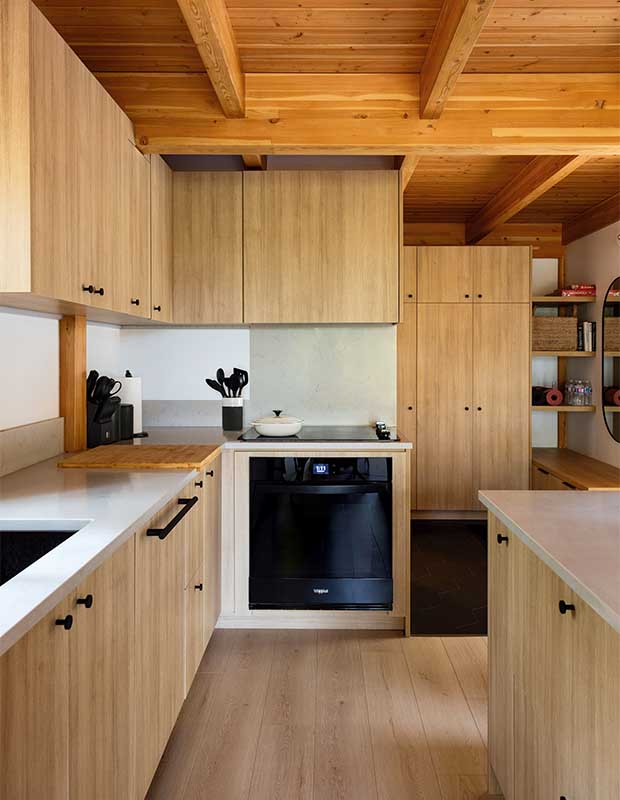
The kitchen was designed for Cathy’s husband, Mike, who loves to cook. “It’s the heart of our cottage, and it’s perfect for gatherings,” she says.

The stairway leads to two bedrooms and the main bathroom on the second floor. The white, wood and black palette is carried throughout.
For the decorating, matte black finishes seen in the lighting, mirror frames, dining chairs, hardware, and even the small freestanding stove bring a grounding influence to every room.
Read more: 10+ beautiful staircases that make an entrance

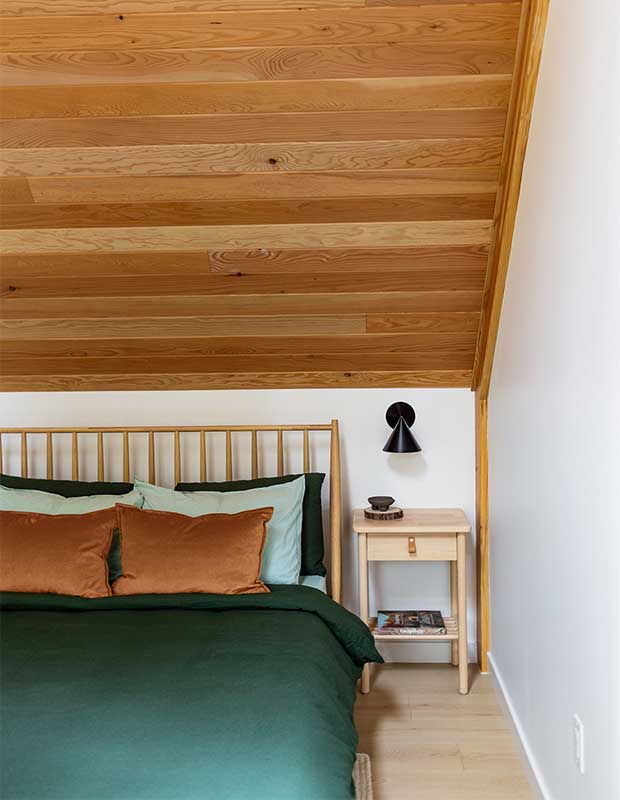
The wood-clad, vaulted ceiling is the defining feature of the front bedroom.
The cabin feels larger than it is. The spacious kitchen is great for cooking and the living area and bedrooms are open and uncluttered. Every furniture piece was selected based on layout and how the space would flow.

The back bedroom is an uncluttered space with colourful bedding that’s flooded with natural light.

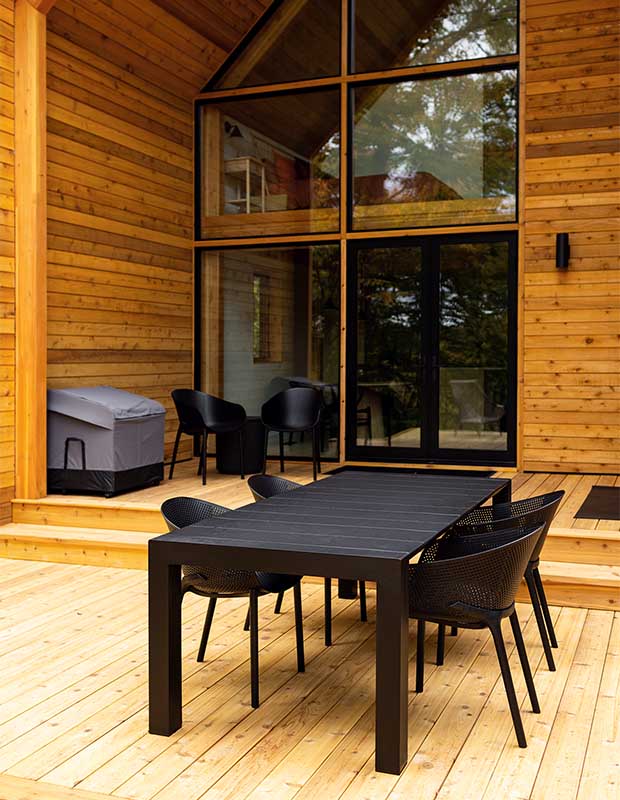
Black outdoor furniture pops against the cedar cladding and Douglas fir deck.
Sustainability is also central to the concept. The cabin kits use sustainably sourced wood and generate minimal construction waste, with every component arriving precisely packed and labelled. “It came together like a puzzle,” says Cathy. Her contractor said it was the most thoughtfully packaged build he’d ever seen.
Related: 10 incredible indoor-outdoor spaces

A generous back deck is divided into barbecuing, lounging and dining zones. Western red cedar and black sheet metal cladding lend durability and drama to the cabin’s minimalist silhouette.
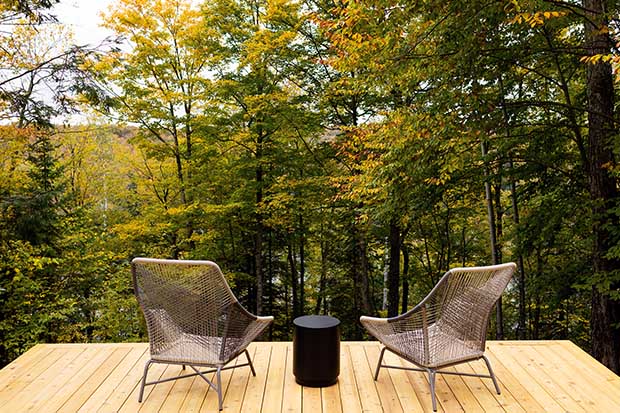
“When you walk out onto the back deck, you feel completely immersed in the forest. You hear birds every morning, and sometimes a deer will leap through the woods. It’s like heaven.”

The cabin stands amidst a forest of maple, birch and balsam fir trees, home to wild turkeys, deer and wolves.
Video: Tour three unique backyards with stunning design and natural materials

The cabin is designed to withstand rugged Canadian winters with its timber frame, insulated panels, metal cladding and corrugated metal roof.
Cathy spent years imagining her cabin, now dubbed Camp Haliburton. As a child, she and her mother would drive to this area to drop off her father and brothers at Scouts camp. She wasn’t allowed to stay — “it wasn’t for girls” — but, now, she returns to “camp” as often as life allows.
- Photographer Portrait and main entrance exterior photography by Danielle Meredith/Photography by Eleanor Dobbins, CDH Carpentry, courtesy of The Backcountry Hut Company
- Designer Architecture, Leckie Studio; design, Nadia Milton